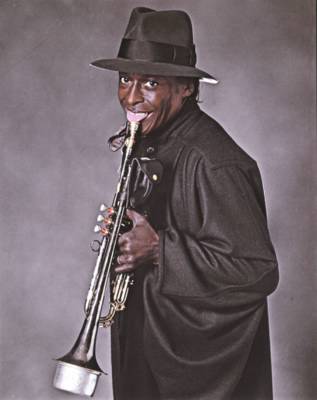
One of the highest values \u200b\u200bwas to incorporate new jazz, for example Coltrane Coleman
Miles Davis is the man of jazz that most times has been reinventing itself. For him, when a musical style had its own name, was outdated. Few musicians have been as innovative as this skinny trumpet, which gave an air of haughty, lovers of luxury cars and one of the few musicians blacks from a wealthy family. One of the few also overcame heroin addiction in 1954, and retain their talent to several generations of musicians.
Born in Alton, Illinois, on May 25, 1926, Miles Davis took the musical experience of his life, when he heard the bebop masters Dizzy Gillespie and Charlie Parker together at a concert in San Luis, where he had moved his family. Since then followed, first to California and when he was sent by his father to New York to study at the prestigious Juilliard School, Miles chose to spend the nights in clubs with Parker, taking notes and then test what they learned on his trumpet. Since the first recordings denotes a particular accent, in which every note counts, and the less the better. But all critics agree that, with Duke Ellington and John Coltrain, with whom he recorded albums that have been described as 'music 2000', Miles is one of the few jazz musicians that are not mandated from the beginning to one style.
At the end of the 40 had met the arranger Gil Evans, which would open the way to cool jazz and with whom he recorded Birth of the Cool, Miles Ahead , Porgy and Bess and Sketches of Spain. The first two decades of his career is marked by its proximity to John Coltrain and include today considered classics and improvisations Milestones and Kind of Blue .
changing then persuaded his companions to seize the rock and electronic instruments, challenging listeners to jazz purists.
His third debut, when in 1981 and we all believed missing, including about pop and youth excited fan of the merger. Miles fascinated with the wide range of interpretations on the trumpet to the last of his concerts when no one knows why he, who hated to talk to someone who did not know music and feared nothing more than being referred to the story jazz, promised to soon play a journalist Gil Evans arrangements at the Montreux Jazz Festival.
When he died two months later, on September 28, 1991, killed more than 120 recordings, including several in vivo of the tours made especially in recent years in Europe. His legacy is in the form as perceived and promoted talent, which included in their orchestras, which reached up to 19 members. The list of discoveries is almost like an encyclopedia of jazz and also includes Coltrane to George Coleman, Wayne Shorter, Chick Corea, John McLaughlin, Keith Jarrett, Bill Evans, Kenny Garrett, etc, etc. Davis is said that without jazz history had not been the same.
version of "Round Midnight" recorded in Stockholm in 1967. Miles Davis on trumpet, Wayne Shorter on tenor sax, Herbie Hancock on piano, Ron Carter on bass and Tony Williams on drums.


