Thursday, November 17, 2005

Myamee Where Does She Get Her Hair Done?

Porgy & Bess


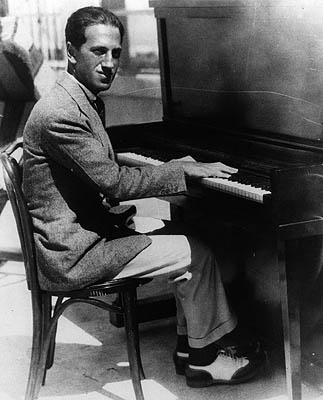
The opera takes place in Catfish Row, a black settlement in Charleston, South Carolina. Gershwin believed strongly that it should be played by blacks but at that time was difficult to find black artists with experience in ópera.Gershwin was all the time involved in casting and production of his opera. Todd Duncan, first Porgy, remember that the composer "was all over the country hoping for Porgy." It also notes that when he finally decided to hire him, told him he only had to sing two or three songs as a test but really did sing for over an hour and a half. "It was amazing. At one point George Ira and I pulled the score of the hand and began to sing them with her horrible voice and aged but with much feeling that I did mourn, "says the first performer of Porgy.La play opened in September 1935 in Boston and was received enthusiastically by audiences and critics. With some changes again to New York on October 10, 1935. There were only 124 roles of Porgy and Bess on Broadway and only a few years later the money was recovered invested. Never was very well received. A large number of black critics and composers as Duke Ellington, criticized the opera. "No black man would fool Porgy," Ellington said in a note periodística.Dos years after the premiere, Gershwin died of a brain tumor. It was just before turning 39 years old. In 1959 there was a film version produced by Samuel Goldwyn and directed by Otto Preminger who was severely criticized for portraying stereotypes. For years, Porgy and Bess was more successful in Europe, where he was considered "the real American opera", which in the Unidos.La first complete version of Porgy and Bess in their country of origin was in Houston in 1970, directed by John Main with great success. Was finally produced at the Met 50 years after the first producción.El merit of Porgy and Bess is the only opera based on the jazz of the '20s and '30s who survived after the post-war period where composers began to use jazz as a satire. But above all, many critics believe that the great contribution of this work is to achieve a union between the individual artistic context and socio-historical. The truth is that the time was ripe for the merger of serious art and popular culture. It was a moment of great crisis and social questions that raised many protest movements in the arts. Hitler came to power and fascist cause, condemned by the Jews, was in his apogeo.Gershwin was not a man interested in politics, at least in public life. However, it is possible to appreciate his teachings on some of his work. Before Porgy and Bess worked in a series of satirical shows maverick character. He cared for the great political issues of the moment can be seen in a letter he wrote to a friend, telling how he spent that summer on the island inspiration for the opera: "We sit at night with our pipes to watch the stars. With my friends always talk about two favorite subjects: Hitler's Germany and women of God. " In the musical, the composer was inspired by the pop and concert music. In both areas innovated, writing songs and musicals for Broadway. Among his works include Rhapsody in Blue (1924), Piano Concerto in F (1925), American in Paris (1928) and Cuban Overture (1932). Through these works, and Porgy and Bess, Gershwin became undoubtedly the American pianist and composer with higher quality and successfully managed to combine elements of jazz and American folk tunes, playing some of the issues depths of the human condition.


no doubt "Summertime" is the most famous song from the Gershwin opera. This video is a presentation of Ella Fitzgerald in Berlin in 1968 and is almost a gospel version and the best I've played in his career.

Prostate Infection Condition_symptoms

Album Coleman Hawkins: tenor sax Father


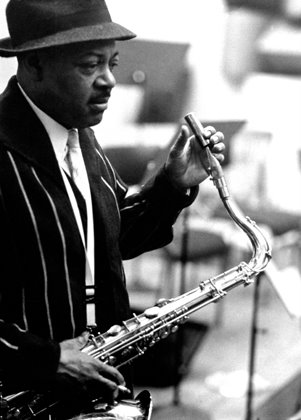
While it is true that Adolphe Sax invented the saxophone, the first and most fundamental chapters the history of the instrument were written by Coleman Hawkins, the first important jazz tenor saxophonist and one of the greatest of all time. Permanent and modern improviser, his encyclopedic knowledge of chords and harmonies gave effect for five decades to par with any competitor. Coleman Randolph Hawkins (nicknamed "Hawk" and "Bean") was born on 21th November 1904 in St. Louis, Missouri, in the heart of a wealthy family.

his five years he studied piano, switched to cello at age seven, and two years later took up the tenor saxophone, an instrument was not used then in jazz, and in the marching bands and orchestras popular, is played with a technique that a lot like that of circus musicians. By 1914
start academic music studies completed in Chicago, a city to which he moved with his family in 1919. Here is the first opportunity to hear jazz and symphonic music. In 1920 he was hired by the blues singer Mamie Smith, who had in his band with top musicians such as Buster Bailey and Sidney Bechet. With it will come to New York and recorded his first album, contributing some solos, which opens the way jazz musicians in the best circles of the city.

No wonder, then, that in 1923 he joined the Fletcher Henderson orchestra, which would the first big band in jazz history and which remain Hawkins eleven. One of his companions will be the trumpeter Louis Armstrong, who makes much of its resources melodic, rhythmic and technical, improving both its robust sound. So, Hawkins will become the most important soloist with the orchestra, gradually forming the original and personal style which will soon also start to copy dozens of saxophonists. In 1934 it
career in Europe, recorded in Holland and France. Return to the U.S. in 1939 to compete with former students and many imitators, and its main rival other tenor, Lester Young, who curiously practiced a completely different style to yours. Soon reaffirms its leading position and put together his own orchestra, with which he recorded his historical version of "Body and Soul", about his definitive consecration. Coleman Hawkins was revered throughout his life, and somewhat feared, in an absolutely unanimous by his fellow musicians, whether young or old, whatever the instrument to execute.

In the forties will be interested in new trends and the young musicians who practice them. Their adaptation to the times you will gain experience with the players of the bebop revolution, and later joins the intellectuals of cool jazz. Hawkins had earned the reputation as "terrible" for his chilling technique, his incomparable knowledge of harmony that allowed him to link chords imperceptibly, and an ability to create at any time, no matter how fast it was, improvisations that always touched the master and a perpetual swing. Coleman Hawkins

maintained its dominance until shortly before his death, a victim of pneumonia, May 19, 1969 in New York. So the man went to the tenor saxophone was what Armstrong had been on the trumpet. He invented the first and therefore most important instrument rules concepts and language that would determine the tenor saxophone in the jazz any time. His influence on other specialists such as Ben Webster, Chu Berry, Don Byas, Sonny Rollins and John Coltrane is undeniable, and also art that goes beyond any possible calculation.


"Body and Soul" was recorded by "Bean" in 1939 and is considered the cornerstone of the modern tenor saxophone.
version of this video was recorded at the Poplar Town Hall in London in 1967, during the tour of Jazz at the Philharmonic, and accompany the pianist Teddy Wilson Hawkins, bassist Bob Cranshaw and drummer Louis Bellson.

Witch Contanent Does Chickan Poks Most Occor

Little Somethin 'Else: A Summit


March 9, 1958. The saxophonist Julian "Cannonball" Adderley, decided to invite the trumpeter Miles Davis, whose band was playing then, recording her own album Somethin 'Else. Bad idea. Davis is the companion of anyone. Occupies much space, introduces the themes or plays the first single. Becomes virtual leader of the session.
The saxophonist is reserved for exclusive showcasing the ballad "Dancing in the Dark", but Davis himself clear in the notes original album, it was him who made him touch that subject.
Cannonball discouraging for the poor.


very good film at the Newport Jazz Festival 1957. Here we see in Cannonbal Adderley "Work Song." The band is formed by Cannonball Adderley on alto sax, Yusef Lateef on tenor sax, Nat Adderley on cornet, Joe Zawinul on piano, Sam Jones on bass and Louis Hayes on drums.