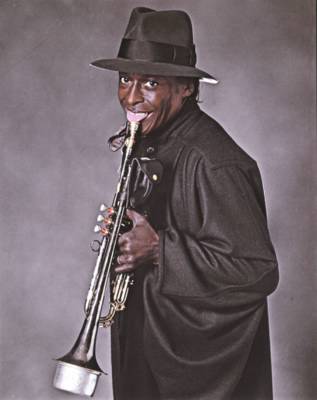
One of the highest values \u200b\u200bwas to incorporate new jazz, for example Coltrane Coleman Miles Davis is the man of jazz that most times has been reinventing itself. For him, when a musical style had its own name, was outdated. Few musicians have been as innovative as this skinny trumpet, which gave an air of haughty, lovers of luxury cars and one of the few musicians blacks from a wealthy family. One of the few also overcame heroin addiction in 1954, and retain their talent to several generations of musicians. Born in Alton, Illinois, on May 25, 1926, Miles Davis took the musical experience of his life, when he heard the bebop masters Dizzy Gillespie and Charlie Parker together at a concert in San Luis, where he had moved his family. Since then followed, first to California and when he was sent by his father to New York to study at the prestigious Juilliard School, Miles chose to spend the nights in clubs with Parker, taking notes and then test what they learned on his trumpet. Since the first recordings denotes a particular accent, in which every note counts, and the less the better. But all critics agree that, with Duke Ellington and John Coltrain, with whom he recorded albums that have been described as 'music 2000', Miles is one of the few jazz musicians that are not mandated from the beginning to one style. At the end of the 40 had met the arranger Gil Evans, which would open the way to cool jazz and with whom he recorded Birth of the Cool, Miles Ahead , Porgy and Bess and Sketches of Spain. The first two decades of his career is marked by its proximity to John Coltrain and include today considered classics and improvisations Milestones and Kind of Blue . changing then persuaded his companions to seize the rock and electronic instruments, challenging listeners to jazz purists. His third debut, when in 1981 and we all believed missing, including about pop and youth excited fan of the merger. Miles fascinated with the wide range of interpretations on the trumpet to the last of his concerts when no one knows why he, who hated to talk to someone who did not know music and feared nothing more than being referred to the story jazz, promised to soon play a journalist Gil Evans arrangements at the Montreux Jazz Festival. When he died two months later, on September 28, 1991, killed more than 120 recordings, including several in vivo of the tours made especially in recent years in Europe. His legacy is in the form as perceived and promoted talent, which included in their orchestras, which reached up to 19 members. The list of discoveries is almost like an encyclopedia of jazz and also includes Coltrane to George Coleman, Wayne Shorter, Chick Corea, John McLaughlin, Keith Jarrett, Bill Evans, Kenny Garrett, etc, etc. Davis is said that without jazz history had not been the same.
version of "Round Midnight" recorded in Stockholm in 1967. Miles Davis on trumpet, Wayne Shorter on tenor sax, Herbie Hancock on piano, Ron Carter on bass and Tony Williams on drums.
guitarist Albert Edwin "Eddie" Condon was born on November 16, 1905 in Goodland, Indiana. Eddie grew up in Chicago Heights, Illinois and learned to play the banjo as a teenager. Working with bands in Chicago in the early 1920's, when he began his long career 50 years with musical legends like the clarinetist and saxophonist Pee Wee Russell, the cornetist Muggsy Spanier, drummer Gene Krupa and trumpeter Jimmy McPartland. Eddie Condon
also became a legend as a pioneer of rhythm guitar and also as a promoter of jazz music. Condon organized combos, small groups and big bands for decades, covering various styles of jazz.
Eddie Condon became a spokesman when his fame as jazz historian became known through his autobiography "We Called It Music" (We call it music) was published in 1947. It is also the author of 4 other books on the history and techniques of jazz.
The most popular was "Treasury of Jazz" (Treasures of jazz), he wrote: "I played all the issues to all jazz musicians you know and also with a hundred more who never heard the name, but you should have heard . There were so many extraordinary musicians that were not named Duke or Louis, but they played fantastically. "
After a recording session with Louis Armstrong, Condon joined the Red McKenzie vocalist to form "The Chicagoans." Later organized a series of bands that defined the Chicago style. Among those notable groups include "The Chicago Rhythm Kings, who recorded a wonderful version of" I've Found a New Baby "(I found a new girl), the" Mound City Blue Blowers "and" The Rhythmakers ", a group that became famous by recording a series of jazz standards like" Yellow Dog Blues "and" Mean Old Bed Bug Blues "in the traditional Chicago style.
The cornetist and guitarist Bobby Hackett Condon contract in 1938. The result was another series of recordings that made history, songs like" At the Jazz Band Ball "and" Doin 'the New Lowdown. " Condon wrote about his work with Hackett, "was the most exciting of my life." The two were such good friends that inspired clarinetist and saxophonist Bud Freeman to write "Better Than Brothers" (More than siblings). Eddie Condon worked in "Nick's" in the New York borough Greenwich Village since 1942 while promoting jazz concerts in municipalities throughout the U.S. east coast. The decade of 1940 was the height of his fame, sold-out concert, promotion of high-profile jazz and a series of well-known compositions like "Home Cooking" and "That's a Serious Thing." The height of his success came when he opened his own jazz club in 1945, "Eddie Condon's" in Greenwich Village. The club moved to the East Side in 1958 and closed in 1967. Eddie Condon performance various historical roles, including being the first to bring jazz to television, the first to sell a million records in an album LP (long playing). The New York Times announced his death occurred on August 4, 1973 in New York, saying, "Mr. Condon, considered one of the greatest guitarists in jazz, he made his final public performance at the Newport Jazz Festival made at Carnegie Hall in New York on July 5. At the time the concert was devoted to traditional jazz in the company of nearly a dozen musicians with whom he played during his life. Two days later Eddie Condon was hospitalized. "
A version very "hot" from "Royal Garden Blues" recorded in 1962 with participation by the great Wild Bill Davison on cornet, Cutty Cutshall on trombone, Peanuts Hucko on clarinet, Johnny Varro on piano, Eddie Condon on guitar, Jack on bass and Buzzy Lesberg Drootin on drums.
popular in Hollywood Before, jazz was better received by the French cinema of the early twentieth century. Despite being one of the greatest contributions to American culture, jazz was not a frequent guest in the early days of talkies, but The Jazz Singer, 1927, was a blockbuster to heal finances Warner Bros. Over time, the music that came out of the brothels of New Orleans won space on screens and, although their presence has not been extensive in the history of cinema, jazz, when he could, took advantage of their opportunities in the teatros.El jazz and Louis Malle's films have never been products mass distribution. They both have that air of being someone he knew, yet marginal, and have in many cases, more atmosphere than content. Malle (1932-1995) was a jazz enthusiast and used to use in his films, not only as a soundtrack, but as part of the story. Le Souffle au Coeur (Murmur of the heart) the main character is a young chorus girl who steals a jazz album, and Pretty Baby, the film showed Brooke Shields en 1978 como una niña que creció en un lupanar de Storyville, Nueva Orleans, en el que descubre su sexualidad en un ambiente cargado de ragtime y jazz. Sin embargo, el punto máximo de acercamiento entre el jazz y la obra del director francés llegó en 1958, cuando apenas dirigía su segunda película, Ascenseur pour l'échafaud (Ascensor al cadalso). Miles Davis se encontraba en París en esa época y Malle le propuso que hiciera la banda sonora. El trompetista vio la película sin música una sola vez. Después, mientras la proyectaban por segunda ocasión, Davis empezó a improvisar sobre lo que veía en la pantalla y el resultado fue la banda sonora que quedó grabada. Aunque el trabajo no is one of the fundamental works of Miles Davis, what he did with the tape Malle gives an account of the speed of his creativity. As Malle, one of the leading figures of the French New Wave, was still ahead of 24 other films to be made.
The promotional film "Elevator to the gallows", where you can see the beauty of Jeanne Moreau, who had a torrid affair with Miles during filming, and climate "noir" of Davis's music.
For years, Americans have felt ashamed for not having been the first to admit the value of that music so special call, generic and comprehensive, jazz. Indeed, were the European intellectuals of the early decades of the twentieth century, especially English and French, who recognized its importance and aesthetic qualities. not surprising, then, that this new music had greater acceptance in Europe than in the United States. In Berlin, between the twenties and thirties, there were plenty of bars and clubs, as well as famous cabarets, where you could hear jazz. The great Sidney Bechet, a pioneer of new music in New Orleans near Louis Armstrong among the first and second decade of the century, and first major saxophonist in jazz history, between 1929 and 1931 was precisely in the German capital, playing at night in the Wild-West-Bar in Berlin. Bechet remembered, years later, that at least six jazz bands took turns sharing the bill of the place, which gives a rough idea of \u200b\u200bthe intense jazz in the city. is important to note that the European intellectual class jazz considered a genuine artistic expression, and at the same time, the masses began to enjoy the new rhythms and freer and revolutionary possibilities offered when dancing . When it comes to jazz in the thirties, both in the U.S. and Europe, we mean both hitherto predominant styles: the music "hot" (Louis Armstrong, for example, and the followers of the schools in New Orleans and "Dixieland") and Swing, represented mostly by the big band era's most famous (Duke Ellington, Count Basie, Benny Goodman), clearly more commercial, with catchy melodies and easy to sing and, of course, more danceable. "Swing" in the thirties, became synonymous with jazz, and was almost exclusively the music played in dance halls. Was music dancing youth, both in the U.S. and Europe, with a "license" such that no Nazi totalitarianism would be willing to allow.
Situation following the Nazi rise to power. Hitler's National Socialism erected the idea of \u200b\u200ba "national community" or "village community" as a fundamental standard, after which they should align the whole German nation. No wonder, then, that once in power, this movement was characterized by a rapid process of elimination and coordination of all forces and political institutions, social and cultural rights. Consequently, to impose through the official ideology of terror, the Nazis used a complete monopoly of the management of all mass media such as newspapers, film and, fundamentally, the radio, reaching through them to all cultural and artistic expressions, including music. Since ancient times, music had special significance for the Germans, tradition also ascribed to the Nazis, who sought to appropriate the legacy of the classical and romantic, and use it for personal gain. Clear that the simple and sick Nazi vision of what music could be considered valid for the formation of the "village community", differed irreconcilably with the true spirit of those movements. In Germany itself, only years ago, was born atonal music, and classical composers were added the banners of Modernism: Arnold Schoenberg, Alban Berg, Paul Hindemith, among others, Kurt Weill, that even began to incorporate jazz elements to their works. However, after the rise of Hitler, always growing and productive German musical culture was totally paralyzed, everything that had even a touch of "modern" or innovative was manifestly contrary to the new ruling ideology, and should be eradicated. So atonal music was banned, stigmatized as a symbol of disorder shows, and anything else that does not conform to the rigid canons of classical and romantic. If composers such and the name of Stravinsky, Hindemith, Schoenberg and Berg were banned, and many of them had to emigrate from Nazi Germany, it is difficult to imagine the fate of jazz in such conditions: black origin and sympathy that from the beginning had aroused among the Jews, made him an easy target of attack for cleaners and cultural purification of the Third Reich. Several factors and elements that made the Jazz did not remain safe from dictators. First, the spirit's own style, which favored the development of individual potential of the musicians involved in its implementation (improvisation), and Above all, the air of rebellion and freedom that had characterized the jazz from its very genesis, by virtue of their musical background: originally, in its most rudimentary and basic, was the music of slaves or direct children of slaves South America, newly released in the late nineteenth century. On the other hand, dictators Nazis saw the dance as a hobby really serious and problematic issue, both musically and socially, that should not be neglected. From the musical point of view, style, Swing was a fierce attack on the ideal of Aryan supremacy, from the moment he saw a dreadful mix of Jewish working with the vicious and wild colors of black music. In fact, jazz was called by the Nazis as "Black music" and could not tolerate that young people dancing to music that was considered so degrading and lacking any aesthetic value. From the social point of view, the issue was in turn two edges. On the one hand, while the Swing even in Europe had reached an amazing level of popularity, the great mass of young people who attended the dance halls and knew the choreography of the respective dances (fox-trot, jitterbugg, shimmies, charleston ), as well as the English lyrics of songs they heard belonged the middle and upper middle. The latter plane collided with the idea of \u200b\u200ba "community of people, completely controlled and uniform, which preferably should meet some folk musical expressions, which represent the" true German spirit. " Finally, dancing was objectionable in that it constituted a dangerous means of "sexual depravity." The official report about a festival in Hamburg in February 1940 clearly illustrates :"... the dancers gave an ugly sight. None of the couples danced normally, there were only swing, and the worst. Sometimes with two boys dancing girl alone, in several other couples formed a circle embracing, jumping, clapping his hands, even rubbing the backs of their heads with each other ... When the band played a rumba, the dancers went into wild ecstasy. Everyone gathered around and sang the chorus in English. The band played numbers increasingly violent, none of the musicians was already seated, all moved on stage compulsively, like wild animals ...".
The King of Swing One of the events that are most concerned the Nazis in the field discussed here, was the rapid rise in success and popularity in the thirties had, first in the U.S. and then globally, Benny Goodman: was called the "King of Swing", and no one hit him in best sellers for over ten years.The "big problem" for the Nazis, with the new representative of the music I danced all the youth of the Western world, whose roots music came from black slaves, was none other than Jewish origin Goodman. born in 1909 in a family of Jewish immigrants in Chicago, Benjamin David Goodman took his first music lessons in the synagogue in his neighborhood, and never hid his ascendancy over his career. As if this were not enough, the main arranger was a former black conductor (Fletcher Henderson, who brought Goodman to swing music "hot") and his gang of white musicians on equal terms, some of them Jews like him, and black musicians. swing not only perverted the purity of youth Germanic, but its greatest exponent, who danced with abandon "wild" to the innocent boys, was an American Jew, who got along well with blacks. This music could not be accepted, and the worst, if he could not be ruled out entirely, its implementation should be strictly reglamentada.Así is how we find a series of extremely absurd regulations, but show how far worried about the Nazi authorities to dilute the very essence of that music, in their eyes, did nothing to pervert the future of the Reich, healthy and pure Aryan youth. The following is an excerpt from an ordinance issued by the central body in charge of directing cultural activities in the Third Reich: 1. The pieces in fox-trot rhythm (or swing) may not exceed twenty percent of the repertoire of orchestras and bands for dancing; 2. In this type of code called jazz, should be preferred in larger scale compositions and lyrics that express the joy of living, rather than the depressing lyrics beans; 3. As the tempo, preference should be given to compositions on the slow light (So-called blues), and anyway, the rate should not exceed the category of "allegro", measured according to the Aryan sense for discipline and moderation. In no way such Negroid excesses in tempo (so-called jazz) or in solo performances (so-called breaks) be tolerated. 4. The so-called jazz compositions may contain up to ten percent of syncopation, the rest should be a movement natural legato investment devoid of hysterical rhythmic pattern of the music of the barbarian races and promoting dark instincts alien to the German people; 5. It is strictly forbidden the use of strange instruments in the spirit the German people, as well as the use of mutes which turn the noble sound of brass instruments in howling wind and Jews; 6. Also banned the drum solos that exceed half a meter in time of four quarters, except in stylized military marches; 7. Musicians are forbidden to make vocal improvisations (scat).
Despite these strict rules, jazz in 1937 still showed unexpected signs of resilience among German youth itself, to the point that the Nazi authorities decided to promote a diluted slightly syncopated form of music that was even by the way called "German Jazz."
Youth Organizations of Hitler saw to it that the dance halls in the swing was king, were gradually replaced by meetings and folk dances of clearly in line with the ideology of "national community" . The radio, so vital to the enormous popularity that jazz had in previous years, by express order of Josef Goebbels, Hitler's propaganda minister, left entirely to transmit "the Judeo-Negroid music of American capitalism, so unpleasant to Germanic soul "(words of Goebbels). Inevitably then, jazz was disappearing from public life, officer, passing, and the beginning of its history, underground, and one of the cultural symbols of resistance, especially in occupied France.
For many, this piece of film Universal, 1941, "Hellzapoppin '" is one of the best dance scenes ever filmed. "Hellzapoppin '" was originally a Broadway musical comedy hit that sign was 3 years (1939/1941) and was one of the three works presented in the '30s that exceeded 500 features a total of 1404 presentations. The cast of the film is Shemp Howard, one of the famous "3 Stooges" and the cornetist dress which appears with the famous chef is a member of the orchestra of Duke Ellington, Rex Stewart.
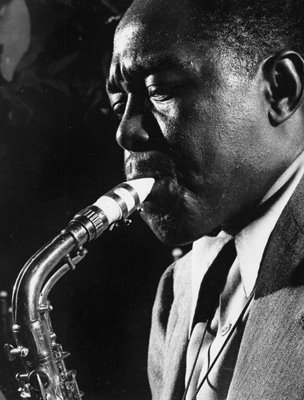
For several legendary night sessions at the club Minton's in New York ended germinated style Jazz pushing towards a downward spiral of creativity that made him the twentieth century classical music. The Bop, with the help of pioneers such as Dizzy Gillespie, Thelonious Monk and Kenny Clarke was counter bomb that shook the foundations of postwar American society, a society excited and eager to discover new horizons after the tragedy. However, nothing had been the same without a leading figure, a brilliant artist who served as a reference for this radical redefinition of jazz that forever changed the playing of the musicians and the way we listen to the fans. Charlie Parker, the archetype of unpredictable musician hit by drugs and alcohol, possessed the divine gift of creativity coupled with an amazing technique allowed him to reach the highest peaks of expression certainly reached the pantheon of historical figures traveled so far by other revolutionaries such as Louis Armstrong or Duke Ellington. And all this despite his tortuous life peppered with scandals and painful premature death at age 35. Dial Records The company was founded by Ross Russell in Hollywood in 1946. The recordings of Charlie "Bird" Parker for this label are among the most essential of its production in importance only comparable to that of the Savoy or the Verve. The two volumes reviewed here contain all of the 8 selected footage recorded sessions, but some gems like the Jam Session recorded Kopely Chuck's house in Los Angeles or several selected outtakes, of which the most interesting from a historical perspective is that of the famous "break" high "Night In Tunisia." In the first session you can listen to Bird by session musicians on the west coast (aside from a very young Miles Davis) playing authentic classic new-style, mostly based on basic structures like the blues or standards Tin Pan Alley. Bird reconstructed at will their musical heritage, producing new melodic lines that run with a rich profusion of notes accurate harmonic bases generally known as a frenzied tempo. These sessions are particularly dramatic piece and a great interest history: the famous Loverman interpretation, where the attentive listener can almost feel the tense atmosphere prevailing: Bird improvises in a chaotic, entering at the wrong time and tune in a completely unusual for a musician of his caliber. The musicians who accompany him look at each other and played with little conviction, making sure it is not valid due to the catatonic state of their leader. Then come The Gipsy, BeBop and after the collapse of Parker, which collapses in the recording studio. That night a room at the Civic Hotel in Hollywood erupted in flames. Parker, under the influence of phenobarbital, was handcuffed and sent to county jail where would his bones in the Camarillo Hospital for detoxification. Pure Jazz history. The other sessions are great, because after their stay at Camarillo Bird lived in a period of some mental stability. Back in New York and the aura of myth on its head, began looking for musicians to form a stable quintet. Miles Davis, also back, was an obvious choice for the trumpet. A solid rhythm section formed by Duke Jordan on piano, Tommy Potter on bass and Max Roach sensational completed a battery like no other combo that helped to swell the legend. The Bird of these recordings is a musician relaxed, great shape both mentally and physically, it dumps all the intensity of his emotions in his masterful improvisation. Miles Davis makes its own usually means records, especially in the ballads, which proves that inspiration can be where there are no pyrotechnics (this is one of the findings of Davis who became a myth in its own right). Max Roach turns his solos and accompaniment to the understanding of modern drumming.
immortal ballads like "Embraceable You", "Do not Blame Me," "My Old Flame." Fast tempos like "Scrapple From The Apple" (based on the chord sequence of "Honeysuckle Rose"), "Dexterity" and "Crazeology" ("I Got Rhythm") nervous and frantic blues like "The Hymn" ("Wichita Blues") or mid-tempo as "Bongo Bop". An incomparable musical legacy that the good amateur should be known almost by heart. Essential.
television Notable historical document of 1952, where Earl Wilson and Leonard Feather gives them the prize of the magazine "Down Beat" with Parker and Gillespie to be the best saxophonist and trumpeter best respectively 1951. Then run a very good version of "Hot House" accompanied by Dick Hyman on piano, Sandy Block on bass and Charlie Smith on drums.
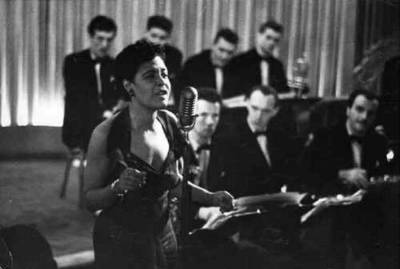
In the world of jazz have seen a number of strange bedfellows, both professional and personal. Rarely, however, there has been as improbable as the brief collaboration between Billie Holiday and Artie Shaw, who worked together in 1938 for eight months full of events. Both Holiday and Shaw were very irritable, unpredictable and difficult to find something they had in common, except that both were extravagantly talented musicians, their approaches to music were dissimilar. He was a clarinet virtuoso who could play anything that came into his head; She had no training but was an intuitive singer was inspired by his limited technique. Despite this, they got along well and, according to the chronicles, made beautiful music together. There are only 5 recordings of them together that have been published recently. These recordings, as they have nothing in common except a high quality. The first, "Lady Day" (Columbia Legacy Jazz CXK 85,470) is an elegant album of 10 CDs with the 153 recordings Holiday made for Columbia between 1935 and 1944, along with a dozen alternate takes and recordings of radio transmissions made recorded live, beautifully remastered by a team of world-class engineers. The album's title is the nickname assigned by the saxophonist Lester Young, a bosom friend and musical partner. Holiday never sang better than on these legendary recordings, especially the four songs recorded in 1936 with a stellar sextet, Artie Shaw on clarinet and Bunny Berigan on trumpet. This was the first recording as a leader of the singer who was only 21 years, one sees how well he is going, especially in his composition "Billie's Blues," which Shaw contributes a single dynamic authoritarian and a choir. The result of this meeting was a great pleasure for all and Shaw invited Holiday to join his band, but she refused and joined that of Count Basie. Shaw maintained his interest and Billie finally agreed in 1938 and was part of the famous band of Shaw. Shaw had never been behind a singer, in fact he hated almost all the singers and used only because it required its managers. On the other hand, Billie Holiday was not a "canary" as pejorative reference to the popular singers of the era. He used his voice to the freedom and flexibility of a virtuoso on any instrument giving new forms to the melodies of popular songs to suit your taste and limited registration. For Shaw, who loved his music different colorations seen in Holiday THE ideal singer for his big band that year. But Holiday mannerisms irritated him superiority of Shaw, "is a smart ass" and dubbed it claimed: "Jesus Christ, King of the Clarinet and Band" but also admitted being impressed by the music and art of Shaw and liked working with a band so disciplined. Album of 5 CDs "Artie Shaw: Self-Portrait" (Bluebird 09026-63808-2), is not as elegant but more selective than "Lady Day," contains 95 tracks recorded by Shaw between 1936 and 1954, of which represent more than two dozen of his band late in the 30's, which is highly regarded by experts of the big bands of jazz. Artie personally selected music and also wrote the book that accompanies this album in which he discusses his career so broadly as his caustic tone but with justified satisfaction. Besides being a great clarinetist and leader of his band, Shaw proves to be an amazing self-anthologist. It would be difficult both to devise a more representative overview of his career that the broad scope of this album is hard to believe that "Artie Shaw: Self-Portrait" was produced by a character at age 91. Sadly Holiday is heard in a groove, but that we Shaw's fault because there is only a recording: "Any Old Time" recording made in the same session that proved the biggest success of Shaw "Begin the Beguine, "." Any Old Time "is a lovely ballad with lyrics and music by Shaw. Holiday sneak sings her solo with the same mixture of innocence and experience that is heard in his recordings as a soloist. His intensity and controlled agriculture counteract divinely sweet insouciance. Shaw took a huge commercial risk to a singer look somewhat controversial, especially because his solos were no less idiosyncratic. Most of the public, as well as the editors-of the time preferred to listen to your favorite songs sung in a conventional manner, which Holiday simply did not deign to do. Two months after joining the band, George Frazier wrote an article en la revista Down Beat en la que describía: "una despreciable campaña de cuchicheos para convencer a Shaw que despidiera a Billie y que la reemplazara con una cantante que podría ser menos talentosa pero por lo menos fuera musicalmente menos exigente". Inicialmente Shaw se mantuvo firme y rechazó estas insinuaciones y continuó presentando a Holiday en sus actuaciones en fiestas y bailes. Ocasionalmente reemplazaba el programa escogido de su repertorio y organizaba jams session que duraban media hora o más. Estas sesiones deleitaban a los amantes del jazz, pero irritaban a los que asistían a estas funciones para bailar. Paulatinamente Shaw fue presionado a presentar música más tradicional. Esto, más el hecho que en su banda had a black singer with a terrible temper and a rather short fuse placed her at great risk. One night in a performance in the southern state of Kentucky, someone in the crowd uttered a racial slur. Holiday instantly responded with an obscenity high voltage. The musicians in the band took it and took it quickly, boarded the bus he was traveling in the band and launched a quick flight to the outskirts of the region, thus avoiding a violent riot. Shaw determined there was no practical alternative to hire a second singer since Billie Holiday had signed a contract with the Brunswick label, why could not record with him and bad desire had to hire a 19 year old girl: Helen Forrest, a freshman who became one of the most talented singers of his generation big bands and both performed together for several weeks. bad to worse. When the band returned to New York in 1938 to act for several months in the Blue Room of the Hotel Lincoln, even Billie was the artist who captured the public attention, not allowed to sit at the bar or dine in the dining room, as they used to do the other musicians in the band. He was forced to enter the hotel through the kitchen and when he was not acting would disappear from the living room and retire to a small room separated from the rest. To this is added that the sponsors of the program that broadcast the shows in the Blue Room radio refused to Billie aired. Billie Shaw abruptly quit blaming being responsible for this situation. Totally unfair, because he had not the slightest control. Billie went to Café Society, a new club soon became famous for the good treatment that was given to black artists. After acting for a year at the Cafe Society, Billie became great by itself. Billie Holiday and Artie Shaw never worked together, but made peace and resumed their friendship. Billie acknowledging the good intentions of Shaw in his book "Lady Sings the Blues, "he wrote in 1956. Shaw also paid an eloquent tribute to Holiday in 1944 when he recorded his best solos on songs made famous by Billie, especially in" Lady Day. "
Very good document
1952 with Billie Holiday with Count Basie's band singing "God Bless the Child" and "Now Baby or Never".