
In the world of jazz have seen a number of strange bedfellows, both professional and personal. Rarely, however, there has been as improbable as the brief collaboration between Billie Holiday and Artie Shaw, who worked together in 1938 for eight months full of events.
Both Holiday and Shaw were very irritable, unpredictable and difficult to find something they had in common, except that both were extravagantly talented musicians, their approaches to music were dissimilar.
He was a clarinet virtuoso who could play anything that came into his head; She had no training but was an intuitive singer was inspired by his limited technique. Despite this, they got along well and, according to the chronicles, made beautiful music together. There are only 5 recordings of them together that have been published recently. These recordings, as they have nothing in common except a high quality.
The first, "Lady Day" (Columbia Legacy Jazz CXK 85,470) is an elegant album of 10 CDs with the 153 recordings Holiday made for Columbia between 1935 and 1944, along with a dozen alternate takes and recordings of radio transmissions made recorded live, beautifully remastered by a team of world-class engineers. The album's title is the nickname assigned by the saxophonist Lester Young, a bosom friend and musical partner. Holiday never sang better than on these legendary recordings, especially the four songs recorded in 1936 with a stellar sextet, Artie Shaw on clarinet and Bunny Berigan on trumpet. This was the first recording as a leader of the singer who was only 21 years, one sees how well he is going, especially in his composition "Billie's Blues," which Shaw contributes a single dynamic authoritarian and a choir.
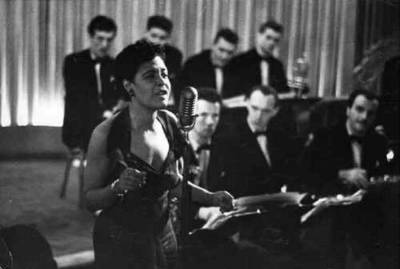
The result of this meeting was a great pleasure for all and Shaw invited Holiday to join his band, but she refused and joined that of Count Basie. Shaw maintained his interest and Billie finally agreed in 1938 and was part of the famous band of Shaw. Shaw had never been behind a singer, in fact he hated almost all the singers and used only because it required its managers. On the other hand, Billie Holiday was not a "canary" as pejorative reference to the popular singers of the era. He used his voice to the freedom and flexibility of a virtuoso on any instrument giving new forms to the melodies of popular songs to suit your taste and limited registration.
For Shaw, who loved his music different colorations seen in Holiday THE ideal singer for his big band that year. But Holiday mannerisms irritated him superiority of Shaw, "is a smart ass" and dubbed it claimed: "Jesus Christ, King of the Clarinet and Band" but also admitted being impressed by the music and art of Shaw and liked working with a band so disciplined.
Album of 5 CDs "Artie Shaw: Self-Portrait" (Bluebird 09026-63808-2), is not as elegant but more selective than "Lady Day," contains 95 tracks recorded by Shaw between 1936 and 1954, of which represent more than two dozen of his band late in the 30's, which is highly regarded by experts of the big bands of jazz. Artie
personally selected music and also wrote the book that accompanies this album in which he discusses his career so broadly as his caustic tone but with justified satisfaction. Besides being a great clarinetist and leader of his band, Shaw proves to be an amazing self-anthologist. It would be difficult both to devise a more representative overview of his career that the broad scope of this album is hard to believe that "Artie Shaw: Self-Portrait" was produced by a character at age 91. Sadly
Holiday is heard in a groove, but that we Shaw's fault because there is only a recording: "Any Old Time" recording made in the same session that proved the biggest success of Shaw "Begin the Beguine, "." Any Old Time "is a lovely ballad with lyrics and music by Shaw. Holiday sneak sings her solo with the same mixture of innocence and experience that is heard in his recordings as a soloist. His intensity and controlled agriculture counteract divinely sweet insouciance.
Shaw took a huge commercial risk to a singer look somewhat controversial, especially because his solos were no less idiosyncratic. Most of the public, as well as the editors-of the time preferred to listen to your favorite songs sung in a conventional manner, which Holiday simply did not deign to do. Two months after joining the band, George Frazier wrote an article en la revista Down Beat en la que describía: "una despreciable campaña de cuchicheos para convencer a Shaw que despidiera a Billie y que la reemplazara con una cantante que podría ser menos talentosa pero por lo menos fuera musicalmente menos exigente".
Inicialmente Shaw se mantuvo firme y rechazó estas insinuaciones y continuó presentando a Holiday en sus actuaciones en fiestas y bailes. Ocasionalmente reemplazaba el programa escogido de su repertorio y organizaba jams session que duraban media hora o más. Estas sesiones deleitaban a los amantes del jazz, pero irritaban a los que asistían a estas funciones para bailar. Paulatinamente Shaw fue presionado a presentar música más tradicional. Esto, más el hecho que en su banda had a black singer with a terrible temper and a rather short fuse placed her at great risk.
One night in a performance in the southern state of Kentucky, someone in the crowd uttered a racial slur. Holiday instantly responded with an obscenity high voltage. The musicians in the band took it and took it quickly, boarded the bus he was traveling in the band and launched a quick flight to the outskirts of the region, thus avoiding a violent riot. Shaw
determined there was no practical alternative to hire a second singer since Billie Holiday had signed a contract with the Brunswick label, why could not record with him and bad desire had to hire a 19 year old girl: Helen Forrest, a freshman who became one of the most talented singers of his generation big bands and both performed together for several weeks.
bad to worse. When the band returned to New York in 1938 to act for several months in the Blue Room of the Hotel Lincoln, even Billie was the artist who captured the public attention, not allowed to sit at the bar or dine in the dining room, as they used to do the other musicians in the band. He was forced to enter the hotel through the kitchen and when he was not acting would disappear from the living room and retire to a small room separated from the rest. To this is added that the sponsors of the program that broadcast the shows in the Blue Room radio refused to Billie aired. Billie
Shaw abruptly quit blaming being responsible for this situation. Totally unfair, because he had not the slightest control. Billie went to Café Society, a new club soon became famous for the good treatment that was given to black artists. After acting for a year at the Cafe Society, Billie became great by itself. Billie Holiday and Artie Shaw never worked together, but made peace and resumed their friendship. Billie acknowledging the good intentions of Shaw in his book "Lady Sings the Blues, "he wrote in 1956. Shaw also paid an eloquent tribute to Holiday in 1944 when he recorded his best solos on songs made famous by Billie, especially in" Lady Day. "
Very good document
1952 with Billie Holiday with Count Basie's band singing "God Bless the Child" and "Now Baby or Never".


0 comments:
Post a Comment