Thursday, November 17, 2005

Myamee Where Does She Get Her Hair Done?

Porgy & Bess


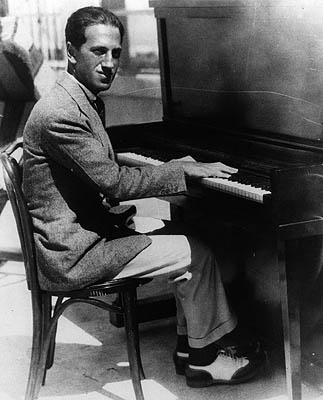
The opera takes place in Catfish Row, a black settlement in Charleston, South Carolina. Gershwin believed strongly that it should be played by blacks but at that time was difficult to find black artists with experience in ópera.Gershwin was all the time involved in casting and production of his opera. Todd Duncan, first Porgy, remember that the composer "was all over the country hoping for Porgy." It also notes that when he finally decided to hire him, told him he only had to sing two or three songs as a test but really did sing for over an hour and a half. "It was amazing. At one point George Ira and I pulled the score of the hand and began to sing them with her horrible voice and aged but with much feeling that I did mourn, "says the first performer of Porgy.La play opened in September 1935 in Boston and was received enthusiastically by audiences and critics. With some changes again to New York on October 10, 1935. There were only 124 roles of Porgy and Bess on Broadway and only a few years later the money was recovered invested. Never was very well received. A large number of black critics and composers as Duke Ellington, criticized the opera. "No black man would fool Porgy," Ellington said in a note periodística.Dos years after the premiere, Gershwin died of a brain tumor. It was just before turning 39 years old. In 1959 there was a film version produced by Samuel Goldwyn and directed by Otto Preminger who was severely criticized for portraying stereotypes. For years, Porgy and Bess was more successful in Europe, where he was considered "the real American opera", which in the Unidos.La first complete version of Porgy and Bess in their country of origin was in Houston in 1970, directed by John Main with great success. Was finally produced at the Met 50 years after the first producción.El merit of Porgy and Bess is the only opera based on the jazz of the '20s and '30s who survived after the post-war period where composers began to use jazz as a satire. But above all, many critics believe that the great contribution of this work is to achieve a union between the individual artistic context and socio-historical. The truth is that the time was ripe for the merger of serious art and popular culture. It was a moment of great crisis and social questions that raised many protest movements in the arts. Hitler came to power and fascist cause, condemned by the Jews, was in his apogeo.Gershwin was not a man interested in politics, at least in public life. However, it is possible to appreciate his teachings on some of his work. Before Porgy and Bess worked in a series of satirical shows maverick character. He cared for the great political issues of the moment can be seen in a letter he wrote to a friend, telling how he spent that summer on the island inspiration for the opera: "We sit at night with our pipes to watch the stars. With my friends always talk about two favorite subjects: Hitler's Germany and women of God. " In the musical, the composer was inspired by the pop and concert music. In both areas innovated, writing songs and musicals for Broadway. Among his works include Rhapsody in Blue (1924), Piano Concerto in F (1925), American in Paris (1928) and Cuban Overture (1932). Through these works, and Porgy and Bess, Gershwin became undoubtedly the American pianist and composer with higher quality and successfully managed to combine elements of jazz and American folk tunes, playing some of the issues depths of the human condition.


no doubt "Summertime" is the most famous song from the Gershwin opera. This video is a presentation of Ella Fitzgerald in Berlin in 1968 and is almost a gospel version and the best I've played in his career.

Prostate Infection Condition_symptoms

Album Coleman Hawkins: tenor sax Father


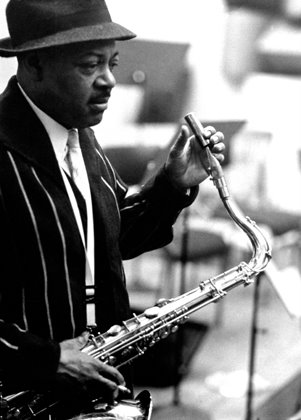
While it is true that Adolphe Sax invented the saxophone, the first and most fundamental chapters the history of the instrument were written by Coleman Hawkins, the first important jazz tenor saxophonist and one of the greatest of all time. Permanent and modern improviser, his encyclopedic knowledge of chords and harmonies gave effect for five decades to par with any competitor. Coleman Randolph Hawkins (nicknamed "Hawk" and "Bean") was born on 21th November 1904 in St. Louis, Missouri, in the heart of a wealthy family.

his five years he studied piano, switched to cello at age seven, and two years later took up the tenor saxophone, an instrument was not used then in jazz, and in the marching bands and orchestras popular, is played with a technique that a lot like that of circus musicians. By 1914
start academic music studies completed in Chicago, a city to which he moved with his family in 1919. Here is the first opportunity to hear jazz and symphonic music. In 1920 he was hired by the blues singer Mamie Smith, who had in his band with top musicians such as Buster Bailey and Sidney Bechet. With it will come to New York and recorded his first album, contributing some solos, which opens the way jazz musicians in the best circles of the city.

No wonder, then, that in 1923 he joined the Fletcher Henderson orchestra, which would the first big band in jazz history and which remain Hawkins eleven. One of his companions will be the trumpeter Louis Armstrong, who makes much of its resources melodic, rhythmic and technical, improving both its robust sound. So, Hawkins will become the most important soloist with the orchestra, gradually forming the original and personal style which will soon also start to copy dozens of saxophonists. In 1934 it
career in Europe, recorded in Holland and France. Return to the U.S. in 1939 to compete with former students and many imitators, and its main rival other tenor, Lester Young, who curiously practiced a completely different style to yours. Soon reaffirms its leading position and put together his own orchestra, with which he recorded his historical version of "Body and Soul", about his definitive consecration. Coleman Hawkins was revered throughout his life, and somewhat feared, in an absolutely unanimous by his fellow musicians, whether young or old, whatever the instrument to execute.

In the forties will be interested in new trends and the young musicians who practice them. Their adaptation to the times you will gain experience with the players of the bebop revolution, and later joins the intellectuals of cool jazz. Hawkins had earned the reputation as "terrible" for his chilling technique, his incomparable knowledge of harmony that allowed him to link chords imperceptibly, and an ability to create at any time, no matter how fast it was, improvisations that always touched the master and a perpetual swing. Coleman Hawkins

maintained its dominance until shortly before his death, a victim of pneumonia, May 19, 1969 in New York. So the man went to the tenor saxophone was what Armstrong had been on the trumpet. He invented the first and therefore most important instrument rules concepts and language that would determine the tenor saxophone in the jazz any time. His influence on other specialists such as Ben Webster, Chu Berry, Don Byas, Sonny Rollins and John Coltrane is undeniable, and also art that goes beyond any possible calculation.


"Body and Soul" was recorded by "Bean" in 1939 and is considered the cornerstone of the modern tenor saxophone.
version of this video was recorded at the Poplar Town Hall in London in 1967, during the tour of Jazz at the Philharmonic, and accompany the pianist Teddy Wilson Hawkins, bassist Bob Cranshaw and drummer Louis Bellson.

Witch Contanent Does Chickan Poks Most Occor

Little Somethin 'Else: A Summit


March 9, 1958. The saxophonist Julian "Cannonball" Adderley, decided to invite the trumpeter Miles Davis, whose band was playing then, recording her own album Somethin 'Else. Bad idea. Davis is the companion of anyone. Occupies much space, introduces the themes or plays the first single. Becomes virtual leader of the session.
The saxophonist is reserved for exclusive showcasing the ballad "Dancing in the Dark", but Davis himself clear in the notes original album, it was him who made him touch that subject.
Cannonball discouraging for the poor.


very good film at the Newport Jazz Festival 1957. Here we see in Cannonbal Adderley "Work Song." The band is formed by Cannonball Adderley on alto sax, Yusef Lateef on tenor sax, Nat Adderley on cornet, Joe Zawinul on piano, Sam Jones on bass and Louis Hayes on drums.

Wednesday, April 6, 2005

Positions Brazilian Wax


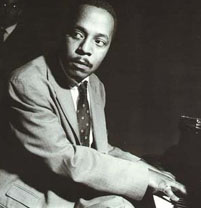
Bud Powell was born in Harlem, NY on September 27, 1924. His family has a clear musical: his grandfather Zachary is one of the best guitarists in the United States, his father, pianist style "stride" is an admirer of James P. Johnson and Fats Waller and his older brother played the violin professionally and trumpet. It was his father who initially gave him his first lessons.

As he was able to play discs Fats Waller and Art Tatum to listen only once. In addition to these figures in jazz began studying classical European forms: Debussy, Chopin, Beethoven, Liszt and especially Mozart and Bach. Is this good cause at 7 years and is admired by other musicians veterans for their playing. At that time his friend played with Elmo Hope, another future jazz pianist, Bach preludes and fugues for four hands.

The Jazz Beginnings
When a teenager wakes up his love of jazz figures Earl Hines, Billy Kyle, Nat "King" Cole and Art Tatum fundamentally. At fifteen he left the school to pursue jazz professionally. His first major contract came with the trumpeter-singer Valaida Snow. It is at this time when participating in various jam sessions where will contact all new figures from the Be-Bop: Bird, Dizzy, Fats Navarro and all of them, Thelonious Monk. In 1944, encouraged by this he joined the Cootie Williams Orchestra and recorded his first solo on "Blue Garden Blues." Monk is a character that will lock an important friendship. Bud declared admirer of the work of Thelonious and this will correspond, in addition to his admiration, with one of his compositions, "In a Walked Bud" and also wrote especially for him as a classic "52nd Street Theme." In this orchestra remain between 1942 and 1944. This year is arrested for disorderly conduct.

problems begin
In following year, 1945, with only 21 years is beaten by a police officer in Philadelphia in the head, according to some sources, to defend himself Thelonious Monk. Are admitted to the Bellevue Hospital for evaluation. In the form of income in your occupation writes, "pianist and composer of nearly 1000 songs." The attending physician writes he has "delusions of grandeur" and wrapped in a straitjacket. For a year to recover in the hospital, suffering from very strong headaches, depression and erratic behavior. Cootie Williams himself said: "He was beaten so hard on his head ... His sickness started right here ...." During these stays spend a large part of his life and gradually diminish his talent and genius.
In 1946, new spin on the activity, reaching a period in which managed to become the most admired pianist of his generation. Once again the jam sessions, including the Minton's Playhouse, which lets you play as a sideman on several recordings by Dexter Gordon, JJ Johnson, Sonny Stitt, Kenny Clarke or Sarah Vaughan.

's solo career
On January 10, 1947 debut as a leader for the Roost label. In May, the only meeting place in a studio with Charlie Parker, recorded for the Savoy label. But not everything could go so well: it is in this year when he returns to be entered for 11 months and for the first time received electroshock treatment.
From August 8, 1949 under the supervision of Alfred Lion and Francis Wolff makes a good example of his mastery of recordings for Blue Note. According to Jackie McLean: "There was great friendship between them and always treated him with great respect." However, at this time and moved from high stages of pure creativity to other crisis.
In 1951 he was arrested again for possession of narcotics and entered the State Hospital Pilgrin for another 11 months where he received electroshock treatment again. At this time only allowed to play the piano once a week under the supervision of an assistant. The result this is a serious memory loss. When visited by Monk, vaguely remembers that she was with him the night of the arrest. When given the details said, "This electroshock treatment makes me forget everything."
then is transferred to Creedmore sanatorium, where he remained until 1953. The deterioration in your ability will gradually affect their music. Playing old standards that clearly shows your joints also suffer with these placements.
Discharged in February 1953, he formed a trio with the bassist George Duvivier and drummer Art Taylor. The owner of the famous "Birdland", Oscar Goodstein will lead to incredible limits their rights to legal guardian and submits it to a new enclosure in an apartment on the East Side to ensure their presence in the local evening sessions of that. Also discussed was that facilitated the marriage of Audrey Hill Bud to ensure a more effective surveillance.
On May 15, 1953 recorded the historic concert at Massey Hall in Toronto with Dizzy Gillespie, Charlie Parker, Charles Mingus and Max Roach. In this peak are different recordings, until in 1956 his younger brother Richie died in the same car accident in which perishes Clifford Brown. This will motivate you to travel to Europe enrolled on a tour of the "Birdland All Star" with the likes of Lester Young, Miles Davis or the Modern Jazz Quartet.

European
stay back in 1959 the old continent but this time for five years. Settled in France where it will be received as a big star. There he founded the trio "Three Bosses" with Kenny Clarke (another famous American jazzmen self-exile) and Pierre Michelot, becoming the main attraction at the Blue Note club in Paris. In addition to this act all over Europe and made several recordings. Thanks to his friends spend a period of relative stability. Either way, Powell also had other health problems. As his health was deteriorating developed tuberculosis in both lungs. Besides his friend Francis Paudras discover that it was taking a small pink pills every day. These turn out to be a powerful tranquilizer Largactil (Thorazine), known as lobotomy or chemical straitjacket. " Mixed with alcohol caused a dangerous over-sedation and can also cause agitation and disknesia, characterized by involuntary movements of the tongue and face.

Homecoming and end
But despite this relative stability in 1965, reminiscent of New York, unable to stop drinking and pills and suffering from tuberculosis and returned to New York. The end of his life passes in his apartment in Brooklyn with his daughter Celia and her childhood friend Mary Frances Barnes. Continue its actions in a scene that was once the master.
died on July 31, 1966 by a combination of tuberculosis and malnutrition. 5000 people accompanying him on his funeral in the streets of Harlem. Barry Harris and Lee Morgan played in his honor. Your
along with Lester Young served as the basis for the character Dexter Gordon played the Bertrand Tavernier's film, "Round Midnight" (Round Midnight, 1986). This film depicts the relationship between Powell and his friend and protector Francis Paudras.

disease and medical
Pianist Fredic A. Harris tried to study the disease from Bud Powell to his musical performances. As a key outcome of the study highlight that the problems were of a physiological rather than neurological, which seems to support the hypothesis that their problems are worse after being brutally beaten on the head. This is also the reason for the futility of all treatments suffered throughout his life.
His acquaintances portray him as being withdrawn and quiet though he could be attacked by unprecedented violence. Alfred Lion recounted the story that for a recording session invited him to his apartment to ensure their presence in the morning at these meetings. At breakfast his little cat jumped on the table. Bud took a large knife and had it not been for his arrest would have ended with the cat. Finally, after managed to get it out of view explain that it was a simple cat. As to his way of being Johnny Griffin called him "Buddha" because of his face expressionless. In conclusion it is surprising that a person with such problems to achieve such level of both composition and execution.

Bill Evans said: "If I had to choose a single musician to his artistic integrity, originality unmatched for their creativity, but also for the greatness of his work, it would be Bud Powell. No one comes close to it. "


Magnificent version of "Anthropology" recorded in Copenhagen in 1962. Accompanying Bud Powell, Jorn Elniff on drums and the great bassist Niels-Henning Orsted Pedersen that this session it is very young and then for several years to go with Oscar Peterson.

Wednesday, March 9, 2005

Disneyland Renal Friendly

Biography of Bud Powell Miles Davis's autobiography reflects the history of Contemporary Jazz

Davis looked back in an autobiography published by Ediciones B, which begins with this confession: "The strongest feeling I have experienced in my life was when I first heard: Diz and Bird."
"The only original contribution to American culture is the music that our black ancestors brought from Africa to change and develop well here .- Whoever is responsible is expressed disc that have marked the history of jazz - or black music, as he prefers to call it -, the same as in the mid-fifties led a legendary quintet who came to listen to stars like Ava Gardner, Marlon Brando, Elizabeth Taylor, James Dean or Sugar Ray Robinson - who later in his group would welcome some young musicians called Wayne Shorter, Herbie Hancock, Chick Corea, Tony Williams, Keith Jarrett, Joe Zawinul, John Mc Laughlin ...

Miles Dewey Davis III (Alton, Illinois, 1926) has not ever bitten tongue. In a White House dinner, the wife of a politician ask him what is what he had done important to deserve to be there. "Look, I hate that someone completely ignorant drop like shit. The woman had asked for, so I said: Now, I've changed music five or six times, so I guess that's what I did. I looked at coldly and added: Now tell me what things he has done that have some significance other than being white. "

white
Society
The idea that everything is harder for a black in a society dominated by whites is repeated throughout his autobiography. "America is so racist place that inspires compassion. It's exactly like South Africa, except that today is more healthy: your racism is not so visible. "
With a tough language, Miles Davis talks about his family, beginning in St. Louis, arriving in New York in 1944 with the pretext of studying music at the prestigious Juilliard School, the Harlem clubs and the street 52 where bebop was born on his adventures with Parker and Gillespie, contacts with Sartre in Paris of the existentialists, the search for music, arrests, boxing and heroin, which was engaged for several years and he was released only in his father's farm after seven or eight days of atrocious pain: "You feel like you're gonna die, and if someone guaranteed that you would die in two seconds you accept without hesitation. Would you take the gift of death to the torture of life. "


For more than 400 pages of the book parade the biggest names in contemporary jazz history: Charlie Parker, Dizzy Gillespie, John Coltrane, Bud Powell, Gil Evans, Thelonius Monk, Charlie Mingus, Billie Holiday, Sonny Rollins, Dexter Gordon ... The drugs they took many of them, although he still present: "They come to visit me all the musicians I've known who are dead ... Their spirits walk around me. "

musical criticism could not be excluded from their sharp comments. "Los críticos sin sensibilidad han destruido mucha música de irán calidad ya muchos músicos que no tuvieron capacidad de decir, con tanto vigor como yo: Que os jodan a todos... Como músico y como artista siempre he querido llegar al mayor número de personas posible. Y nunca me he avergonzado de ello. Nunca he creído que la música llamada jazz estuviera destinada sólo a un reducido número personas o a convertirse en una pieza de museo guardada bajo cristal como otras cosas muertas que en algún momento se consideraron artísticas..."

Estilo propio
No ha olvidado lo que su padre, un conocido dentista de Saint Louis, le dijo en el otoño de 1945: Miles, ¿oyes ese pájaro singing out there? It is a mockingbird. You do not have their own song. Copy the songs of others, and you do not want to do that. You will be yourself, have your own song. That's what it really is. "

Long before his death, his health betrays hip operations, larynx, hernias, diabetes, difficulty opening and closing the hand ..." I have scars entire body except the face. I consider a kind of decoration, the story of my survival, I have heard testimony that get out of shit, overcome adversity and go on doing things the best I could. If I am proud of my scars is because I say you can win if you have heart and tenacity and spirit to keep trying. "


Special
version of" So What "recorded in 1958. Miles Davis on trumpet, John Coltrane on tenor sax, Red Garland on piano , Paul Chambers on bass and Philly Joe Jones on drums.

Thursday, January 13, 2005

Archery Windows Mobile

Sinatra on Capitol Records


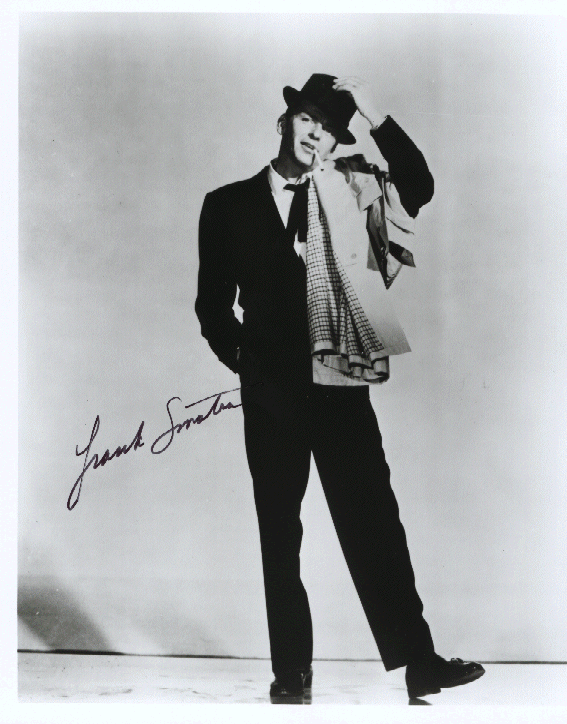
In 1953, Frank Sinatra is in deep personal crisis, artistic and financial. His contract with Columbia, was completed. Traumatic break with the true love of his life, the beautiful Ava Gardner, and the failure of his last recordings were shattered "The Voice" both professionally, and personally. Nobody gives a dime for an artist who, at the time, is, for all over. Their times were far from brilliant success, first with the Dorsey band and then solo. That time when alienated teenagers tirelessly pursued him to try just brushing the body of this young skinny and weak ballads that swept the hearts of his followers.
Sinatra began a "second career" and was now the Capitol label which, without much conviction, he again opened a door. In that year, began the most fruitful period, artistically speaking on Sinatra's career.
From their first album "Song for Young Lovers" to the last recorded for the label in 1961, the wonderful "Point of no return", Sinatra gave us for almost ten years, a great repertoire of recordings, in which gradually his voice and phrasing were gaining security and maturity, no doubt driven by Axel Stordahl arrangements and above all, his inseparable Nelson Riddle, which gave these recordings an eminently jazzy spirit. One must not forget that even when Sinatra is a singer of popular music, so is jazz, Sinatra recorded during his career, with the orchestras of Count Basie and Duke Ellington. Trumpeter Harry James became a regular companion in his recordings and performances. His singing, his phrasing, his improvisations on the melody were laden with a huge swing. It may suffice to recall that Miles Davis himself, which is hardly any quality attribute suspect a white man free, he said, he learned to phrase listening to Sinatra.
And, when listening to Sinatra often we ask where is the Secret. What is it that sets it apart from other great crooners like Bing Crosby and Tony Bennett?. No doubt the tone of your voice is crucial: It's manly, without vibrato, lacking any involvement.
Imaginémoslo: Alone on the stage or in the studio, in front of a microphone, back in the 50's, when the world was young. There is tipped his hat and his striped suit, Sinatra is eminently elegant. Maybe just ordered that "squeeze" some uncomfortable opponent of the Cosa Nostra (because, say, Sinatra was an "honorable man") or may have spent little before U $ S 50,000 in a casino in Las Vegas; da Like, intonation and phrasing are perfect. His authority is complete, the domain, all. In the study, Sinatra does not repeat the shots, the first not only the best, is the only possible. Sometimes longer words, adjust the intonation of the sentences, introduce constant counterpoint and variations on the melody, conveying a infectious swing. His voice is a suggestive nod to a listener fascinated by the personality of irresistible appeal. In the ballads avoids any easy sentimentality. Her technique is never tear baladistica but simply exciting.
But above all, Sinatra always convinces us that he has performed the song in the best manner in which it is possible. Maybe others do it differently, but he is the paradigm. It is difficult to explain why, perhaps because it is a feeling and it is always difficult to explain in words, or rather should not even try.
"Point of no return" in 1961, ends this unparalleled period in the career of Francis Albert Sinatra. Was this a time of great musical quality, but also huge commercial success. Length albums and singles like "Song for Swinging Lovers," "Sinatra swingin'session", "Only the Lonely", "Close to you", "No one cares", "Where are you", "Come fly with me "and many others are today, worship recordings, jewelry labels. Sinatra
created in that year his own Reprise label, with a period that began more commercial but also full of great recordings. But while the set of recordings made by the "voice" to throughout his career put him in a privileged place in the music of the twentieth century, those made for Capitol, Sinatra reserved a prominent place in the history of vocal jazz.


Very good version of "Just One Of Those Things"