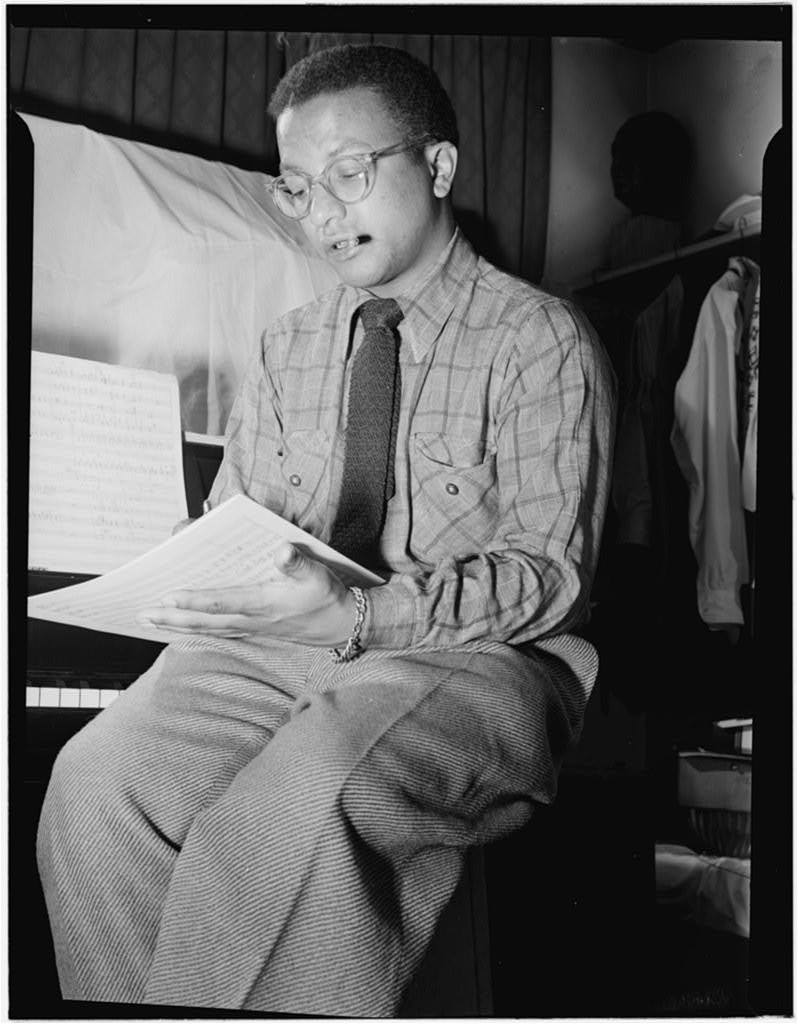
The relationship between Billy Strayhorn and Duke Ellington is one of the curiosities persistent gender bias fed gossip and irrelevant.
By 1938, when Strayhorn, overcoming her shyness, was presented in a theater in Pittsburgh, the Duke was to be closer to the customs of the night, fraternization with musicians and others with whom they shared food and drink but certainly the impact it generated Billy Strayhorn lasted until his death early in 1967 from cancer.
Duke is likely to have been dazzled by the tiny character that I admired and knew by heart addition to Brahms, Beethoven and Bach and other cultural affinities.
was also black and was unknown to himself.
Otto Hardwick, Sonny Greer and Juan Tizol, the most guilty of the band, made fun of their size and their edges homosexuals. I named Sweet Pea (from Popeye's son) but also from their income admitted they were in company with another genius.
"Lush Life" was key to convincing the Duke of his talent. She took him to live with his son Mercer and his sister Ruth, who had more or less the same age, and appointed him a member of the family.
Gradually Ellington was mutating and the way I was going to the public in their clothes and even the titles which apply to their work. For many, this time Duke did his most ambitious works, including Johnny Hodges, without losing its admirable collection of swing, was Acquiring sympathy for the ballads, many of them written by Strayhorn. The same happened with Ben Webster, another inmate convert.
is difficult to know which part of the compositions written by Ellington in this stage have Strayhorn aid, but no one has denied its authorship in some crowning achievements of the orchestra as "Take the A Train", "Chelsea Bridge," "Passion Flower", "Johnny Come Lately" and the posthumous "Blood Count", written in the hospital.
the death of Billy, Ellington was true as ever: "It was incomparable and infinite patience. He had no aspirations to enter any competitions, but his legacy will never be less than definitive at the highest level of culture ".
Billy Strayhorn's classic "Take the A Train" played by the orchestra of Duke Ellington and Ray Nance being solo. Delicious
and modern saxophones arrangement behind the trumpet solo.


0 comments:
Post a Comment